

High-Deductible Health Plans and HSAs: When Lower Premiums Are Worth the Trade-Off
A high deductible health plan can look attractive because the monthly premium is often lower. The trade-off appears when care is needed: the household may have to pay much more before the plan begins sharing many costs. Pairing an eligible plan with a health savings account can soften that trade-off, but only when the rules and cash flow fit the household.
The decision is not simply ‘low premium versus high deductible.’ It is really about whether the household can absorb the deductible, whether the plan is truly HSA eligible, and whether the tax advantages of an HSA are useful enough to justify the structure.
What a High Deductible Health Plan Means
A high deductible health plan uses a larger deductible than many traditional plans, usually in exchange for a lower monthly premium. But not every plan with a high-looking deductible is an HSA eligible health plan. Federal law sets specific deductible and out-of-pocket limits for HSA-qualified HDHP coverage.
That distinction matters because a plan can market itself as high deductible without automatically allowing HSA contributions. Before opening or funding an HSA, confirm that the insurer or Marketplace specifically identifies the plan as HSA eligible.
What a Health Savings Account Does
A health savings account is individually owned. Eligible contributions can receive favorable federal tax treatment, qualified medical withdrawals can be tax-free, and unused money generally rolls over from year to year. The balance belongs to the individual rather than the employer, so it can usually move with the person when jobs change.
The account can be used for qualified medical expenses such as deductibles, copays, coinsurance, and many prescription expenses. HSA funds generally cannot be used tax-free for ordinary health insurance premiums, although federal law includes specific exceptions.
Not Every High-Deductible Plan Makes You HSA Eligible
HSA eligibility depends on more than the deductible. The person must be covered by an HSA-qualified HDHP and generally cannot have disqualifying other coverage. Enrollment in Medicare, for example, affects HSA contribution eligibility. Certain other medical coverage can also matter.
This is why the safest approach is to verify HSA eligibility before making contributions rather than assuming the deductible amount alone is enough.
The 2027 HSA Contribution and HDHP Limits
For 2027, the IRS sets the HSA contribution limit at $4,500 for self-only coverage and $9,000 for family coverage. The minimum HDHP deductible is $1,750 for self-only coverage and $3,500 for family coverage. The maximum annual out-of-pocket expenses allowed under the HSA definition are $8,700 for self-only coverage and $17,400 for family coverage.
Those federal amounts change over time, so anyone reading an older article should verify the current year’s HSA contribution limits and HDHP thresholds before making a contribution or choosing a plan.

When the Lower Premium Can Be Worth It
A high-deductible plan may fit someone who has enough emergency savings to handle a large medical bill early in the year, values lower premiums, and wants to build an HSA balance. It can also work for a household that understands its recurring medical expenses and finds the total annual cost competitive after factoring in employer HSA contributions or premium savings.
The HSA can become especially useful when the owner contributes consistently and does not have to spend every dollar immediately. Unused funds roll over, so the account can support medical expenses in later years rather than resetting annually.
When the High Deductible Can Become a Problem
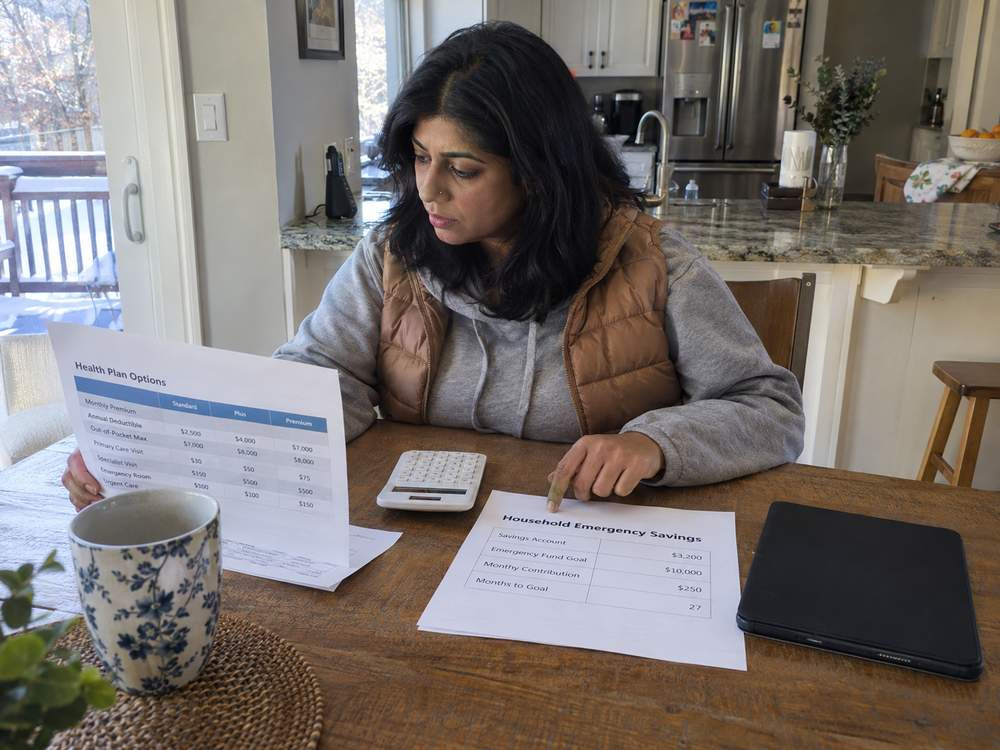
A lower monthly premium is less helpful if a $3,000 or $5,000 medical bill would create credit-card debt. People with expensive prescriptions, frequent specialist visits, planned procedures, young children with regular care, or limited emergency savings should model the upfront costs carefully.
The biggest risk is choosing the plan for the premium while ignoring the deductible. A household can save $100 a month in premiums and still be worse off if expected care produces several thousand dollars of additional cost sharing.
Compare Total Annual Exposure
A practical comparison adds the annual premium to the expected deductible, copays, coinsurance, and prescription costs, then considers the plan’s out-of-pocket maximum as the worst-case in-network exposure. Employer HSA contributions should also be included because they reduce the amount the employee has to fund personally.
Marketplace rules now make many plans compatible with HSAs. HealthCare.gov currently states that all Bronze and Catastrophic Marketplace plans work with HSAs and that some plans in other metal categories do as well. The plan should still be filtered or labeled as HSA eligible before enrollment.
Employer HSA Contributions Change the Comparison
Some employers contribute money directly to an employee’s HSA. That contribution should be treated as part of the plan’s value because it can be used for qualified medical expenses and remains in the account if it is not spent. A plan with a slightly higher premium can still be attractive if the employer contribution meaningfully reduces the member’s net exposure.
When comparing two HSA health insurance options, subtract the employer HSA contribution from the expected medical spending rather than ignoring it. Also check whether the employer funds the account all at once or gradually through the year, because timing can matter if a large medical bill arrives in January.
An HSA Can Become a Long-Term Health-Care Asset
HSA money is not required to be spent in the year it is contributed. The account can continue accumulating for future qualified medical expenses, and some HSA providers offer investment options once account conditions are met. That gives the account a long-term role that is very different from a use-it-or-lose-it benefit.
The tax benefits are useful only after the household can comfortably handle current medical costs. Building an HSA while carrying high-interest debt from an unaffordable deductible defeats much of the purpose. Cash flow should come before long-term HSA accumulation.
Check Cash Flow Before Choosing the Tax Advantage
A high deductible health plan can look attractive because the premium is often lower, but the household still needs a plan for the deductible if care is needed early in the year. When people say HSA health insurance, they usually mean coverage that is specifically compatible with a Health Savings Account. Not every plan with a large deductible is an HSA eligible health plan, so the plan documents should confirm eligibility before contributions are made to a health savings account.
The tax advantages are useful only when the underlying coverage also fits the budget. Before enrolling, compare the annual premium, the deductible, the out of pocket limit, expected prescriptions, and how much cash could realistically be kept available. Check the current IRS HSA contribution limits before deciding how much to contribute. An HSA eligible health plan can work well for someone who wants to build long term medical savings, but HSA health insurance is not automatically the cheapest choice for a person expecting frequent care. The best use of a health savings account starts with a realistic emergency fund, and the HSA contribution limits should be reviewed again each year because they can change.
Frequently Asked Questions
Can I open an HSA with any high-deductible plan?
No. The plan must satisfy federal HSA-qualified HDHP rules, and the individual must also meet the HSA eligibility requirements.
Do HSA funds expire at the end of the year?
No. Unused HSA funds generally roll over and remain in the account from year to year.
Can HSA money pay my health insurance premium?
Generally not for ordinary premiums, although federal law allows certain exceptions. Check current IRS rules before using HSA funds for a premium.
The HSA Works Best When the Deductible Is Affordable
HSA health insurance can be a powerful combination when the lower premium, tax advantages, and household cash reserves all work together. It is a poor fit when the deductible is technically acceptable on paper but financially impossible in real life. The decision should start with the medical bill you could handle, not the tax deduction you hope to receive.